Nostalgic and new — these are the concepts that Okuma’s Footpath course is working to showcase. Okuma was devastated by the 2011 Great East Japan Earthquake and tsunami and the subsequent nuclear accident. All residents were forced to evacuate.
While the area deemed habitable has gradually expanded since 2019, some parts of the town remain designated as “difficult-to-return” zones.
Hoping to revitalize the region by encouraging visitors to come and learn about the recovery efforts, towns along the coast of Fukushima Prefecture, including Okuma, launched an initiative in 2022 to establish footpaths through the towns.
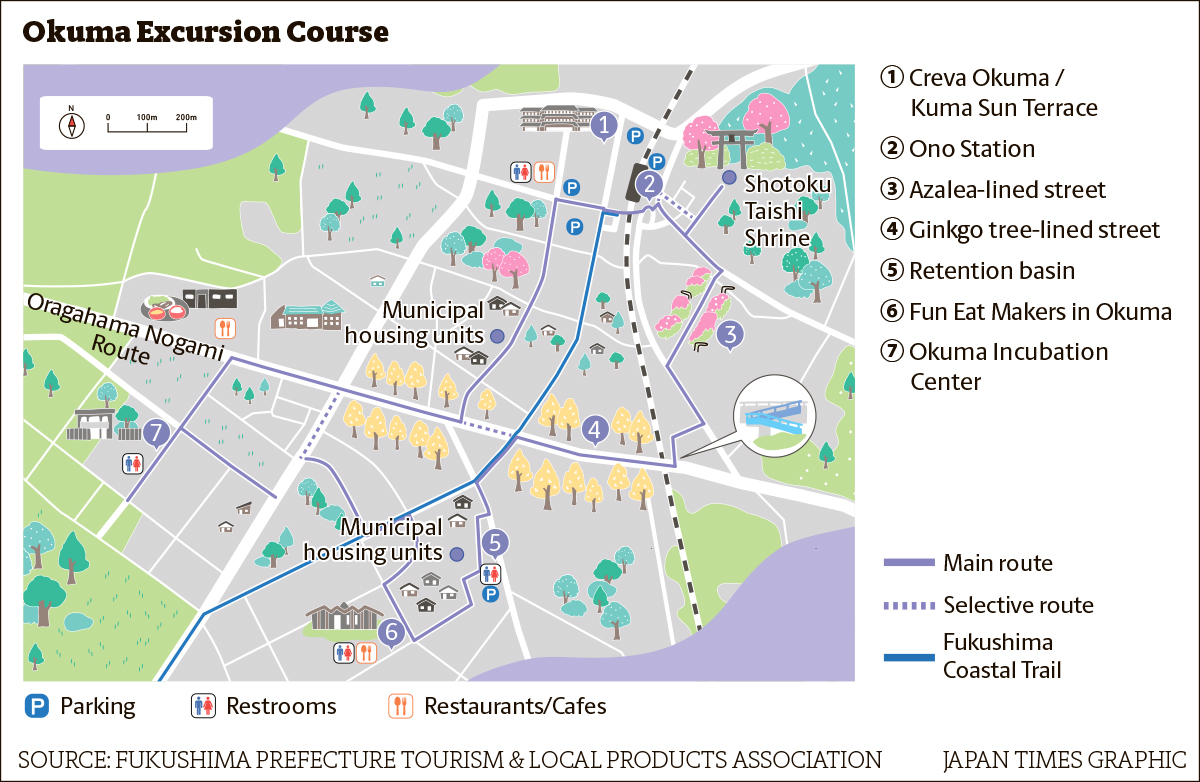
One of these is a 4.8-kilometer course that loops through the former downtown area of Okuma. Following the route on the course map, visitors will depart from the Cerva Okuma multipurpose facility, then pass Ono Station and the Shotoku Taishi Shrine, which has watched over the town since the station first opened in 1904. This stretch of the path offers natural seasonal beauty along streets lined with rows of azaleas and ginkgo trees.
Further along the course, there is a district where municipal housing units have been built for residents returning and new settlers moving into the town. At the southern end of the course stands Fun Eat Makers in Okuma, a stylish wooden facility where crops are cultivated using cutting-edge techniques like hydroponics. It also houses a restaurant that serves dishes made with this locally grown produce.

The Okuma Incubation Center is on the western part of the course. By repurposing a former elementary school building, the OIC has become a place where the original townspeople can feel a sense of nostalgia, while also serving as a starting point for tenant companies to grow their businesses.
The Okuma Odyssey festival will be held at the OIC on March 14. This annual event features live music, exhibitions by OIC tenant companies and food and drink booths from both within and outside the town. Last year, the festival attracted over 3,000 visitors.
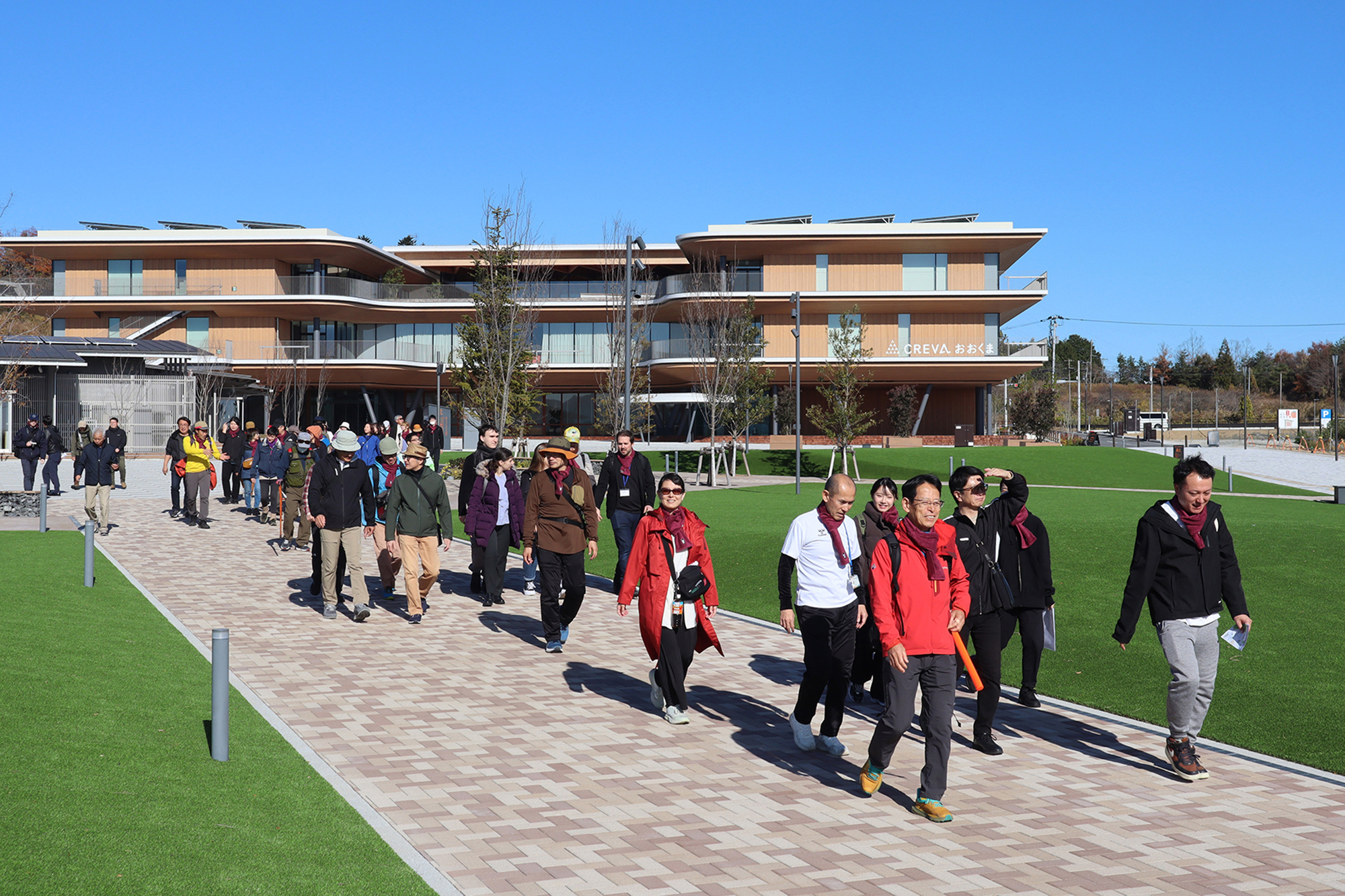
Returning to the beginning of the course, visitors can explore Kuma Sun Terrace and Creva Okuma. Kuma Sun Terrace features an outdoor plaza, restaurants and shops. Creva Okuma is characterized by its modern architecture, which makes extensive use of local wood. It houses a coworking space, rental offices, rental conference rooms and a hall. The wall of the first-floor hall is decorated with a woven tapestry vividly depicting children performing a traditional local dance. This piece, familiar to the town’s residents, was once part of the curtain at the town’s former cultural center.
While preserving elements cherished by long-time residents, Okuma is undergoing a powerful rebirth by advancing plans for new construction projects such as parks.
Takuya Watanabe, chief examiner of the regional promotion division at the Okuma Town Office, said, “In five or 10 years, the townscape here will likely be completely different from what’s shown on the course map.” He expressed hope that people will visit the footpath many times over the years to see how the town grows with its residents.

For more information about the footpath in the town of Okuma, visit: https://www.tif.ne.jp/footpath/#okuma