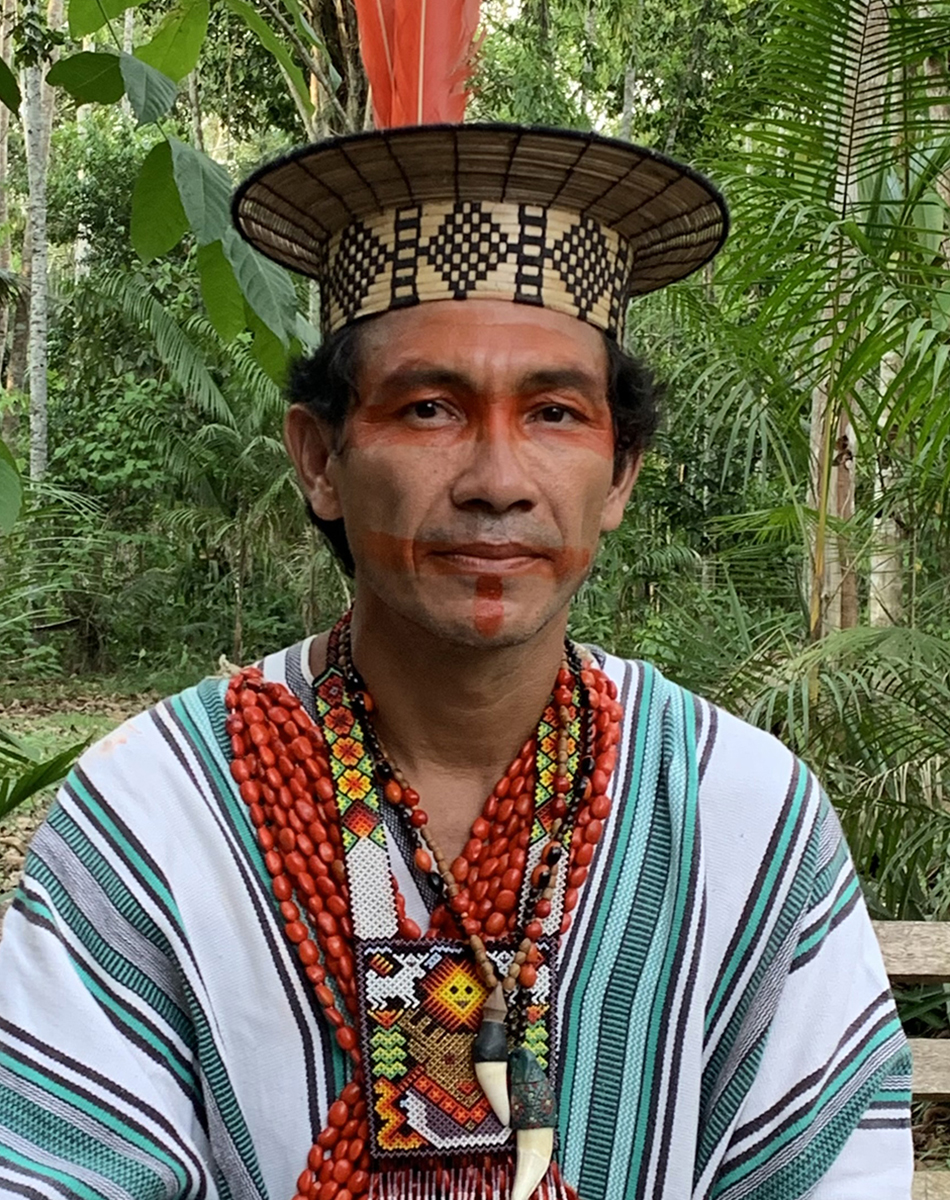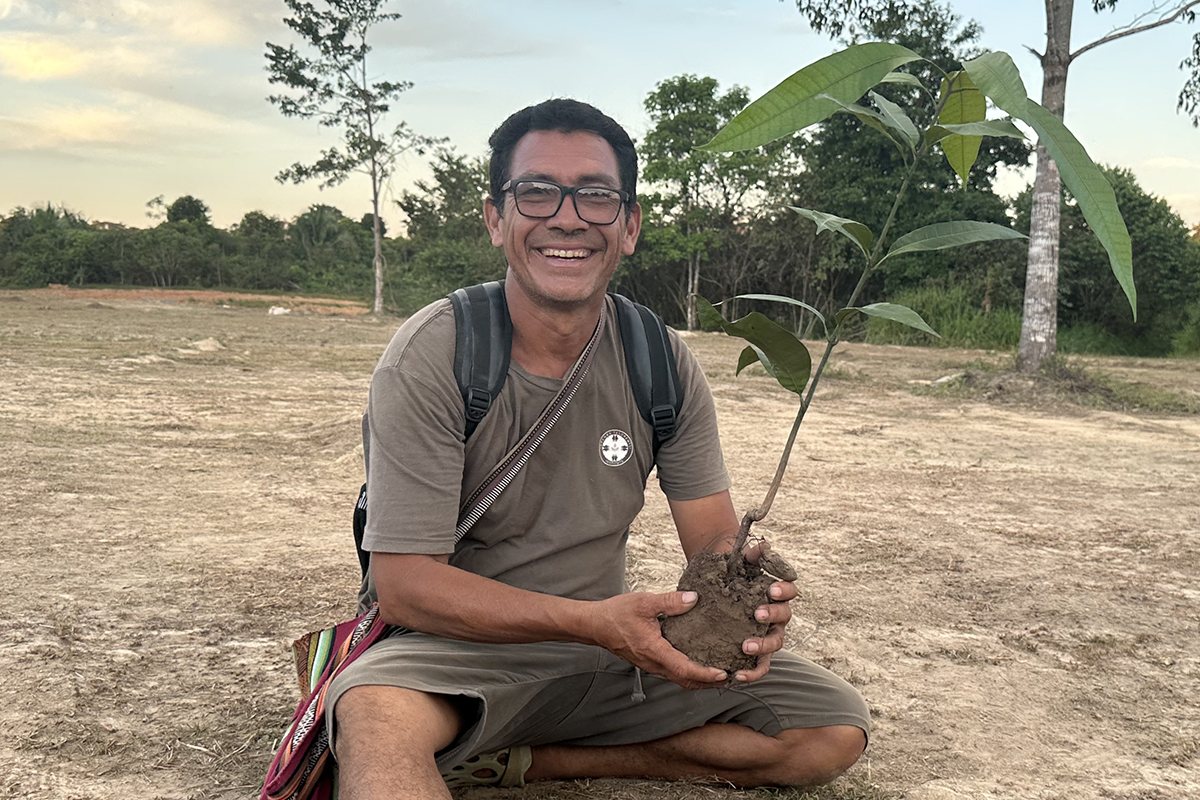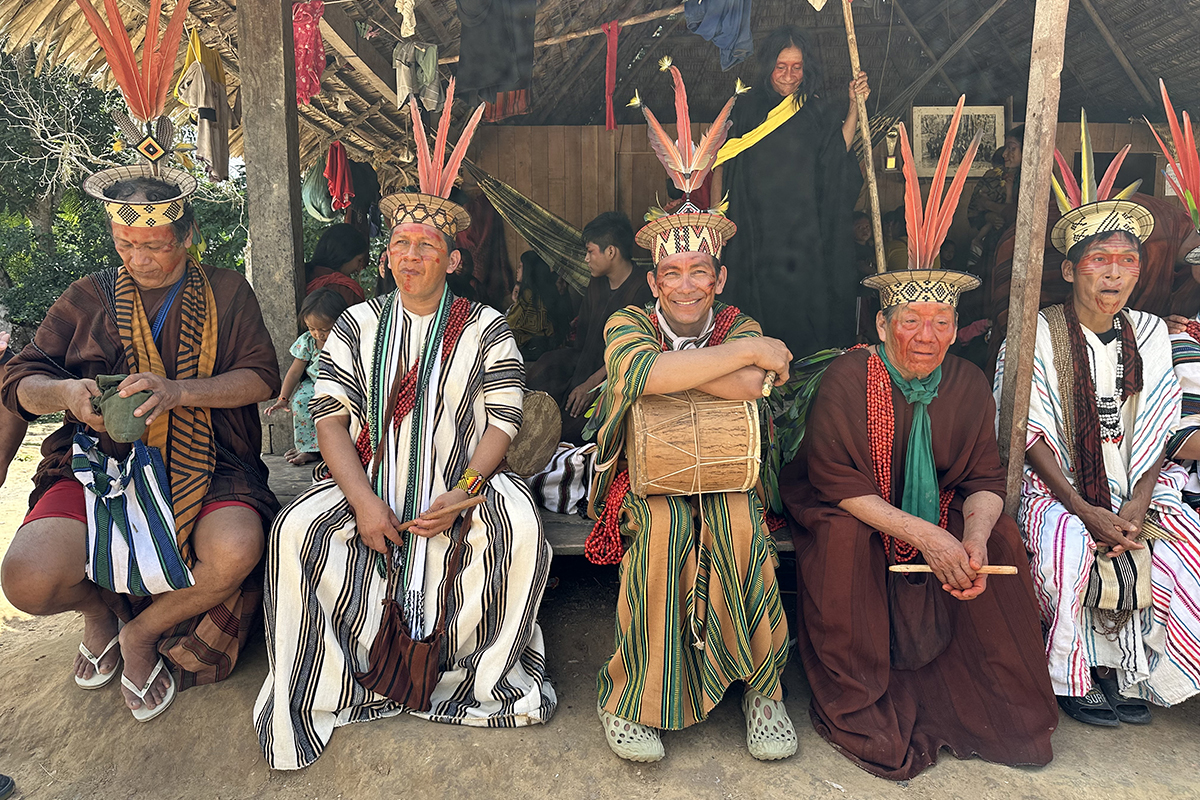
This year, the 43rd Niwano Peace Prize will be awarded to Benki Piyako, an Indigenous spiritual leader of the Ashaninka people in Brazil’s Amazon. He is recognized for his sustained leadership in defending Indigenous land and culture and for pioneering reforestation and environmental protection over the past 35 years. He has advanced education, community-based ecological restoration and the transmission of traditional knowledge, mobilizing youth and communities for large-scale reforestation and biodiversity conservation.

Piyako wrote in his acceptance letter: “This prize is very important to me. I feel honored to receive it following the assessment of so many environmentalists, who recognized the value of our work in the protection and management of territories, as well as in the preservation of our cultural traditions.”
To avoid undue emphasis on any religion or region, every year the foundation solicits nominations from people of recognized intellectual and religious stature around the world. Nominees are rigorously screened by the Niwano Peace Prize Committee, which consists of nine religious leaders from diverse geographical areas, all of whom are involved in movements for peace and interreligious cooperation.
The committee highlighted Piyako as a vital figure in a world increasingly marked by the indiscriminate destruction of nature for economic gain and self-interest, stating: “His advocacy for preserving forests, rivers and a return to simplicity inspires a renewed connection to nature and the profound interdependence between humanity and the environment. By intertwining these natural values with spirituality — a perspective deeply rooted in Indigenous traditions — he reminds us of life’s essence and the harmony essential for sustainable living. Benki’s efforts highlight the urgent need for ecological respect and the preservation of cultural wisdom, offering a benchmark for global responsibility in caring for our shared Earth.”
The presentation ceremony will take place in Tokyo on Tuesday, May 12. In addition to an award certificate, he will receive a trophy and ¥20 million.
Fighting for sovereignty
Benki Piyako was born on Feb. 24, 1974. Throughout his life, Piyako has guided both Indigenous and non-Indigenous communities to strengthen and fight for their political, social and economic sovereignty.
He has played a major role in the projects of the Ashaninka people of the Amonia River to defend their land (on the border with Peru). He has also supported the sustainable development and cultural strengthening of Ashaninka communities in Peru to combat pressures from logging companies, the oil industry and drug traffickers, while also protecting key water resources of the region. He founded the Indigenous Ayahuasca Conference, a global platform led by Indigenous peoples to protect sacred traditions and the rights of Indigenous communities while raising voices against commercialization and Westernization.
His work reflects a visionary approach to social entrepreneurship that has required significant resilience across the past 35 years. By prevailing over severe challenges, including death threats and natural disasters, he has strengthened his resolve as a globally celebrated defender of Indigenous human rights and the rights of nature.
Reforestation and spirituality
A central focus of Piyako’s work is to collaborate with local Indigenous and non-Indigenous communities to reforest degraded areas and protect the natural resources of the Municipality of Marechal Thaumaturgo and the surrounding region. He was guided by his grandfather Samuel Piyako, who shared with him ancient knowledge of Ashaninka spirituality and medicinal plants. Piyako also graduated as an Indigenous agroforestry agent from the Pro-Indigenous Commission of Acre in 2002, helping to create the curriculum for the management of natural resources in Indigenous territories.
Another focus of Piyako’s work is to raise global awareness of the importance of protecting the environment in our day-to-day activities. He has been teaching younger generations the importance of environmental protection, along with agroforestry skills, as he understands they are the ones who will ultimately protect nature.
Piyako created the Yorenka Atame (forest knowledge) Center in 2007 to educate young people about forest preservation. The center has achieved remarkable progress, planting over 2 million trees and making strides in animal conservation, protecting species such as turtles, monkeys, wild pigs and tapirs. In 2011, he helped set up the Association of Young Guardians of the Forest, and in 2018 built the Yorenka Tasorentsi Institute to serve as a place of exchange for Indigenous and contemporary agroforestry techniques.

Piyako’s movement is connecting people to the land and the land to its people. He believes that he is connected to the spiritual world, which guides him through decisions. His latest initiative is the creation of a medical center that will join traditional sciences with the spiritual and healing knowledge of the forest.
For his dedication, Piyako has been honored with the National Human Rights Prize by the Brazilian government in 2004, the Human Rights Award from the city of Weimar in 2013, the United Nations Development Programme Equator Prize in 2017 and the Culture for Peace Prize in 2020.
Since 1992, when he participated in the U.N. Earth Summit, Piyako has served as an ambassador for the Ashaninka people. His work has gained international visibility through documentaries by Arte TV and Al Jazeera. He has met with various political leaders and social entrepreneurs, coordinating initiatives focused on environmental protection both in Brazil and abroad. His model of environmental recovery has inspired projects in the United States, Mexico, Italy, France and the United Kingdom.
In his message of thanks, Piyako emphasized the urgency of our collective responsibility, stating: “We need to look to the waters of the rivers, to the forests, to the land, and to everything on which we survive. … I have planted more than 4 million trees. … I planted them to tell the world that we are capable of restoring this planet. … We are among the greatest guardians of this great biodiversity, and we invite you to be part, together with us, in caring for the Earth — because the Earth is one of the greatest assets for humanity’s survival.”
Award honors those working to better the world
The Niwano Peace Foundation established the Niwano Peace Prize to honor and encourage individuals and organizations that have contributed significantly to interreligious cooperation, thereby furthering the cause of world peace, and to make their achievements known as widely as possible.
The foundation hopes in this way both to enhance interreligious understanding and cooperation and to encourage the emergence of still more people devoted to working for world peace.
The prize is named in honor of the founder and first President of the lay Buddhist organization Rissho Kosei-kai Nikkyo Niwano. For Niwano, peace was not merely an absence of conflict among nations, but a dynamic harmony in the inner lives of people as well as in our communities, nations and the world.
Niwano Peace Prize recipients
2025 Musawah
2024 Mohammed Abu-Nimer
2023 Rajagopal P. V.
2022 Michael Lapsley
2021 Shih Chao-hwei
2020 Pomnyun
2019 John Paul Lederach
2018 Adyan Foundation
2017 Munib A. Younan
2016 Centre for Peace Building and Reconciliation
2015 Esther Abimiku Ibanga
2014 Dena Merriam
2013 Gunnar Stalsett
2012 Rosalina Tuyuc Velasquez
2011 Sulak Sivaraksa
2010 Ela Ramesh Bhatt
2009 Gideon Baguma Byamugisha
2008 Prince El Hassan bin Talal
2007 Cheng Yen
2006 Rabbis for Human Rights
2005 Hans Kung
2004 The Acholi Religious Leaders’ Peace Initiative
2003 Priscilla Elworthy
2002 Samuel Ruiz Garcia
2001 Elias Chacour
2000 Kang Won-yong
1999 The Community of Sant’Egidio
1998 Maha Ghosananda
1997 The Corrymeela Community
1996 Marii K. Hasegawa
1995 M. Aram
1994 Paulo Evaristo Arns
1993 Neve Shalom/Wahat al-Salam
1992 A.T. Ariyaratne
1991 Hildegard Goss-Mayr
1990 Norman Cousins
1989 Etai Yamada
1987 The World Muslim Congress
1986 Philip A. Potter
1985 Zhao Puchu
1984 Homer A. Jack
1983 Helder P. Camara